Plumbing problems rarely happen at a convenient time. A dripping tap can become an ongoing annoyance, a blocked sink can interrupt your routine, and a heating problem can make your home uncomfortable when temperatures drop. When something goes wrong, many people search online for a local plumber in Cardiff or a nearby plumber who can discuss the problem and explain what to do next.
Choosing a plumber is about more than finding the closest result in a search engine. You’ll want to understand whether the company covers your area, whether it handles the type of work you need, and how it communicates about appointments and costs. This guide explains what to consider when arranging plumbing or heating services in Cardiff—and how Edizi Ltd can help customers across Cardiff and South Wales.
Why choose a local plumber in Cardiff?
A plumber who works in Cardiff and the surrounding area may be familiar with the types of properties and plumbing systems found locally. More importantly, choosing a company that clearly serves your area makes it easier to check availability and arrange a visit if one is needed.
When you search for a plumber around me, remember that search results don’t always tell you whether a business actually covers your address. Check the company’s service-area information or contact it directly. Cardiff includes a range of neighbourhoods and nearby communities, so confirming your location is a straightforward but useful first step.
A local company may also be easier to contact for follow-up questions. If you need advice about the work, want to clarify an appointment, or have a question after a visit, clear communication can make the experience less stressful.
Edizi Ltd provides plumbing and heating services in Cardiff and other parts of South Wales, including Swansea, Newport, Bridgend, and Barry. Contact the team to confirm whether your address is covered and discuss the service you need.
Common reasons to call a plumber
Some plumbing problems are easy to notice, while others develop gradually. Knowing what to look for can help you decide when to seek professional advice.
Leaking taps and pipes
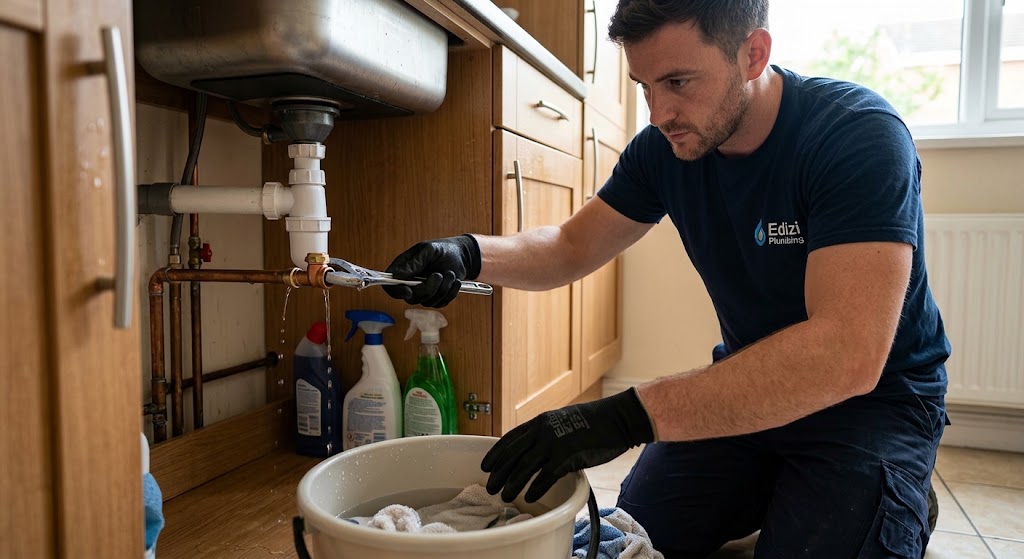
A dripping tap may appear minor, but it can waste water and become increasingly frustrating. A leak beneath a sink or behind an appliance may be harder to spot. Look out for damp cupboards, water marks, musty smells, or unexplained moisture around pipework.If you find a leak, keep the area clear and, if it is safe and practical, turn off the relevant water supply. Avoid dismantling pipework unless you know what you’re doing. A plumber can assess the source and advise on the appropriate repair.
Blocked sinks and slow drains
Water draining slowly from a sink or bath can be caused by a build-up of everyday debris. If more than one drain is affected, or the problem keeps returning, it may need further investigation. Be cautious with strong chemical drain cleaners, which may not be suitable for every pipe or blockage. Follow product instructions carefully and never mix cleaning products. If you can’t clear the blockage safely, contact a plumber to discuss the symptoms.
Toilet problems
A toilet that keeps running, flushes poorly, or shows signs of a leak can waste water and disrupt your household. If you notice water around the base, a persistent filling sound, or a change in flushing, it’s worth arranging an assessment. Try to describe when the issue started and whether it happens after every flush.
Low or inconsistent water pressure.
A sudden change in water pressure can have several possible causes, from a local issue with a tap or appliance to a wider plumbing concern. Check whether the change affects one outlet or multiple taps. This information can help a plumber understand the situation when you call.
Heating and hot-water issues
If your radiators aren’t warming as expected, your heating controls aren’t responding, or your hot-water supply has changed, you may need help from a plumbing and heating professional. For work involving gas appliances, use an appropriately qualified professional. Never attempt to open or repair a boiler yourself.
How to choose the right plumber
When comparing plumbing companies, focus on practical details rather than relying on a single search phrase or advertisement.
Confirm the service area
Check that the company works in your part of Cardiff. If you’re searching for a nearby plumber in Cardiff, ask whether your postcode is covered and whether the company can offer an appointment that suits your needs.
Ask about the type of work
Plumbing and heating cover a wide range of tasks. When you make an enquiry, explain what has happened and ask whether the company handles that type of work. If the problem involves a boiler or another specialist system, check that the professional has the appropriate qualifications for the work.
Request clear information about costs
Before work begins, ask how charges are calculated and whether there may be additional costs. The exact price can depend on the cause of the problem, the parts required, access to the affected area, and the time involved. A clear conversation helps you understand what to expect.
Look for clear communication
A professional service should make it easy to ask questions and explain the next steps. When you contact a plumber, note whether the response is clear and whether you’re told what information is needed. You should feel comfortable asking for clarification before agreeing to work.
Check reviews thoughtfully
Customer reviews can help you understand other people’s experiences, but read them with care. Look for comments about communication, punctuality, and how the work was explained. Consider the overall pattern rather than making a decision based on one review alone.
What information should you provide when you call?
A few details can make your first conversation more useful. If possible, prepare:
Your postcode or Cardiff neighbourhood. A short description of the problem. When you first noticed it. Whether it is getting worse or happening repeatedly. Whether the issue affects one fixture or several. Any steps you have already taken. Whether there is active leaking or visible water damage.
If there is an active leak, explain where the water is coming from and whether you have been able to turn off the supply. Don’t put yourself at risk to inspect a leak, particularly near electrical equipment or in an unsafe area.
Simple ways to reduce plumbing problems
Not every plumbing issue can be prevented, but a few sensible habits can help you notice problems early:
Check under sinks occasionally for dampness or signs of a leak. Avoid putting grease, wipes, and unsuitable items down drains. Pay attention to changes in water pressure or drainage. Keep an eye on radiators and heating controls as the seasons change. Know where your internal stop tap is, and make sure you can access it. Arrange professional help if a problem keeps returning.
These steps aren’t a substitute for repairs, but they can help you spot changes before they cause more disruption.
Plumbing and heating support from Edizi Ltd
If you’re looking for a local plumber in Cardiff, Edizi Ltd can discuss your plumbing and heating requirements and confirm whether your location is covered. The company also serves customers in Swansea, Newport, Bridgend, Barry, and other parts of South Wales. Whether you’re dealing with a leaking tap, a drainage concern, a toilet problem, or a heating issue, start by explaining what you’ve noticed. The team can then discuss the next steps and availability. For specialist work, ask about the relevant qualifications and service details before proceeding. Searching for an expert plumber around me can be stressful when something has gone wrong. Taking a moment to confirm the service area, describe the issue clearly, and ask about costs can help you make a more informed choice.
Need a plumber in Cardiff?
If you need plumbing or heating support in Cardiff, contact Edizi Ltd to discuss your requirements and check availability. Whether you searched for a nearby plumber, a local plumber in Cardiff, or an expert plumber around me, make sure the company covers your address and can help with the work you need. Suggested meta description:Need a local plumber in Cardiff? Learn what to look for when choosing plumbing and heating support, spot common household problems, and contact Edizi Ltd to check service availability. Before publishing, confirm that every listed service, qualification, service area, and response-time claim accurately reflects Edizi Ltd’s offering.
A burst pipe won’t wait: here is what to do right now
A burst pipe emergency can put a lot of water through your ceilings, floors and electrics within minutes, and the damage grows every minute the water keeps running. If you are standing in a wet kitchen in Cardiff, Barry, Bridgend, Swansea or Newport right now, go straight to the minute-by-minute steps below. If you are reading this to be prepared, save it for the day you need it.
At Edizi Plumbing and Heating, we are your nearby plumber across South Wales. The homes that suffer least are almost always the ones where someone acted quickly and calmly in the first ten minutes. This guide gives you that plan in plain English, explains what to avoid, and tells you when it is time to hand the job to a local expert plumber.
Why the first 10 minutes matter most
Water from a burst pipe does not stay where it starts. It runs along joists, soaks into plasterboard, drips through light fittings and pools under flooring where you cannot see it. Once a ceiling is saturated it can sag or collapse, and damp left in walls and floors can encourage mould within a day or two.
Quick action does three things:
It limits the damage. Less water means a smaller drying-out job and fewer repairs afterwards.
It keeps you safe. Water and electricity are a dangerous mix, and a few early decisions keep everyone in the house out of harm’s way.
It protects your insurance claim. Insurers expect you to take reasonable steps to stop further damage, and photographs taken early make a claim easier to settle.
The good news is that stopping most burst pipes in the short term does not need tools or plumbing experience. It needs you to know where your stopcock is and what to do next.
The first 10 minutes: your step-by-step burst pipe plan
Follow these steps in order. Take a breath first: you have more time than it feels like if you work through them calmly.
1. Minutes 0 to 2: turn off the water at the stopcock
Your internal stopcock is the main shut-off for the water supply to your home. In most homes it sits under the kitchen sink, but it may be in a utility room, under the stairs, in a downstairs toilet or near the front door. Turn it clockwise until it stops. If the water keeps running, the burst may be on the supply pipe before the stopcock, which may be your responsibility or your water company’s depending on where it is. Go straight to calling a plumber.
2. Minutes 2 to 3: drain the pipes
Open the cold taps and flush the toilet to drain water out of the system and take pressure off the damaged pipe. Leave them running until they stop. If your home has a loft tank, hot water can keep flowing, so once the heating is off (step 3) open the hot taps as well.
3. Minutes 3 to 4: switch off the heating and hot water
Turn off your boiler and any immersion heater. This protects the boiler and stops the system from heating empty pipework. Do not turn them back on until a plumber has checked the system.
4. Minutes 4 to 5: make electrics safe
If water is near sockets, appliances or light fittings, and you can reach your consumer unit without stepping through water, switch off the electrics at the fuse board. If water is coming through a light fitting, or you would have to stand in water to reach the fuse board, do not go near it. Keep everyone away and call an emergency electrician. If anyone is at risk, call 999.
5. Minutes 5 to 8: contain the water and protect your belongings
Place buckets and bowls under drips and use towels to soak up water. Move furniture, rugs, electronics and valuables out of the wet area. If a ceiling is bulging with water, keep well clear of the area below it, because it can fall without warning. A plumber can advise on releasing the water safely.
6. Minutes 8 to 10: take photos and make the calls
Photograph the damage and the burst pipe before you clean up. Then phone a plumber and your home insurer. When you call Edizi on +44 7397 191375, tell us your postcode, where the leak is, whether the stopcock is off, and whether there is any water near electrics. That helps us prepare before we arrive.
What not to do in a burst pipe emergency
Panic leads to mistakes that make a bad situation worse. Avoid these:
Do not force a stuck stopcock. A seized stopcock can snap and make the flooding worse. Stop and call a plumber.
Do not touch electrics with wet hands or while standing in water. If you cannot switch off safely, stay away.
Do not turn the heating back on to see if it is fixed. Running a system with a damaged pipe can harm the boiler and spread more water.
Do not use appliances in wet rooms. Washing machines, dishwashers and extension leads can be live and soaked.
Do not rely on tape or putty as a permanent fix. A repair clamp or tape can slow a small leak for a short time, but it is only a temporary measure until a qualified plumber repairs the pipe properly.
Do not leave it until morning. A leak that looks small at 10pm can bring down a ceiling by the time you wake up.
Do not hire the first number you find without checking. Look for a plumber with proper qualifications, clear pricing and local reviews.
Common causes of burst pipes in South Wales homes
Knowing why pipes burst helps you spot the risk early. In homes across Cardiff, Newport, Swansea, Bridgend and Barry, the usual culprits are:
Freezing and thawing. Water expands as it freezes, and pipes in lofts, garages, outhouses and external walls are most at risk during cold snaps. The pipe often splits when the ice thaws and the water flows again.
Corrosion and age. Older homes, including the many terraced properties across South Wales, can still have ageing pipework. Corroded pipes and tired joints eventually give way.
High water pressure. Constantly high pressure strains fittings and joints, particularly in older systems.
Poor installation or old repairs. A badly fitted joint can hold for years before it fails.
Accidental damage. A nail or screw through a pipe while hanging a shelf or fitting a cabinet is a classic cause.
Ground movement. Underground supply pipes can crack as the ground shifts, often showing up as damp patches or a sudden drop in pressure.
If you notice stained ceilings, damp patches, a drop in water pressure or the sound of running water when everything is off, do not wait for a burst. Book an inspection.
When to call an emergency plumber (and who to call in your area)
For a burst pipe, the answer is almost always now. Call a plumber straight away if:
Water is still flowing after you have turned off the stopcock
You cannot find or turn the stopcock
Water has reached electrics, or a ceiling is bulging or dripping
The burst is inside a wall, floor or ceiling where you cannot see or reach the pipe
Your boiler, heating or hot water has stopped working after the leak
Edizi Plumbing and Heating is a local expert plumber with quick call-outs across South Wales. Wherever you are, you are speaking to a close by plumber who knows the area and the type of homes in it:
Cardiff: your nearby plumber for emergency leaks in city terraces, flats and family homes.
Barry: a close by plumber for burst pipes and heating emergencies across the town and the coast.
Bridgend: a local expert plumber for emergency repairs in homes across Bridgend and the surrounding villages.
Swansea: an emergency plumber in Swansea for burst pipes, leaks and urgent heating faults.
Newport: a reliable plumber in Newport for fast leak repairs and emergency call-outs.
Wider South Wales: if you are nearby but not listed, call anyway. We will tell you honestly how quickly we can reach you.
Most burst pipes are preventable. These habits cost little and can save you thousands in repairs:
Find and test your stopcock now. Turn it off and on once a year so it does not seize, and make sure everyone in the house knows where it is.
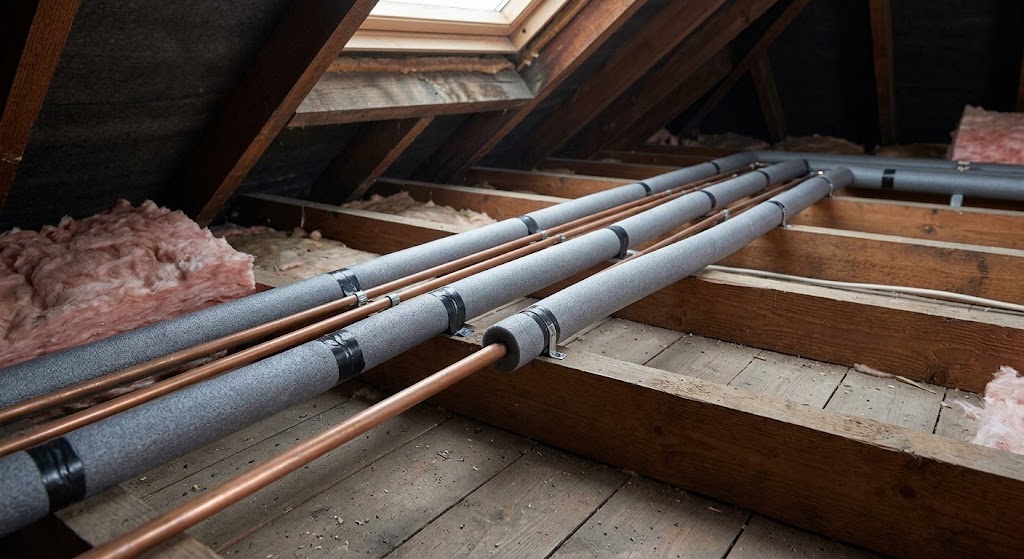
Insulate exposed pipes. Lag pipes and tanks in lofts, garages and outbuildings before winter.
Keep some heating on in cold weather. If you go away, leave the heating on low, typically around 12 to 15 degrees, so pipes inside the house stay above freezing.
Let warm air reach loft pipes. On very cold nights, leave the loft hatch open if it is safe to do so.
Fix drips and damp patches early. A small leak is often a warning sign of a failing joint.
Get your heating and plumbing checked yearly. A qualified plumber can spot corrosion, loose joints and pressure problems before they fail.
Know who to call. Keep a trusted local plumber’s number in your phone, such as Edizi on +44 7397 191375.
Burst pipe emergency FAQs
How much does an emergency burst pipe repair cost?
It depends on where the burst is, how easy it is to reach, the materials needed and the time of day. A quick repair to an accessible pipe costs far less than opening up a wall or floor. We give you a clear price before work starts, so there are no surprises.
Is a burst pipe covered by home insurance?
Many buildings and contents policies cover escape of water, but terms vary, and some exclude gradual leaks or unoccupied homes. Check your policy and contact your insurer as soon as possible. Keep your photos and your plumber’s invoice.
How long can a burst pipe leak before it causes serious damage?
Serious damage can start within minutes to hours, depending on the size of the burst and what is underneath. Ceilings, floors and electrics are all at risk, which is why turning off the stopcock quickly matters.
Can I repair a burst pipe myself?
You can stop the water and apply a temporary clamp or tape in an emergency, but a lasting repair needs the right fittings and a check of the surrounding pipework. Have a qualified plumber complete it, especially in a ceiling, a wall or near the boiler.
How quickly can an emergency plumber reach me in Cardiff, Swansea or Newport?
It depends on your location and how busy we are. Call us and we will give you an honest arrival time.
What if the burst pipe is outside my home?
If water is coming from the supply pipe in the street or near your boundary, contact your water company, Dŵr Cymru Welsh Water. If it is on your side of the boundary, a plumber can repair it.
Burst pipe? Call Edizi, your nearby plumber
A burst pipe is stressful, but the plan is simple: turn off the stopcock, drain the system, switch off the heating, keep clear of electrics, contain the water and call for help. Do those things in the first 10 minutes and you will have done most of what can be done to protect your home.
When you need a local expert plumber in Cardiff, Barry, Bridgend, Swansea, Newport or anywhere in South Wales, Edizi Plumbing and Heating is here to help. Call +44 7397 191375 or use the Get a Quotebutton on edizi.co.uk and tell us what is happening. We will take it from there.