Category: Guidance

  • Blocked Drain in Swansea: Causes, Fixes and When to Call a Plumber

    Blocked Drain in Swansea: Causes, Fixes and When to Call a Plumber

    A blocked drain rarely announces itself politely. It starts as a sink that drains a little slower than usual, then a gurgle from the pipes, then a smell, and finally water that will not go anywhere at all. If you are dealing with a blocked drain in Swansea, the good news is that many blockages can be cleared quickly once you know what is causing them.

    This guide explains the common causes of blocked drains, the safe fixes you can try yourself, the things you should never do, and when it is time to call a professional. At Edizi Ltd, we are a nearby plumber serving Swansea, Cardiff, Newport, Bridgend, Barry and the wider South Wales area.

    Signs You Have a Blocked Drain

    The earlier you spot the signs, the easier the fix. Look out for:

    • Slow-draining sinks, baths or showers
    • Gurgling noises from plugholes or toilets
    • Water pooling in the sink, shower tray or around a floor drain
    • Bad smells coming from drains or around the property
    • A toilet that flushes weakly or fills almost to the top
    • Water backing up into another fixture when you use a different one
    • Damp patches or overflow outside near a manhole or gully

    If more than one fixture is affected at the same time, the blockage is probably further along the pipework rather than just in one sink.

    Common Causes of Blocked Drains in Swansea Homes

    Blockages are usually caused by what goes down the drain, plus age and wear. These are the most frequent culprits.

    Kitchen sinks

    • Fat, oil and grease. These cool and harden inside pipes, trapping food scraps and building up over time.
    • Food waste. Rice, pasta, coffee grounds and vegetable peelings can collect and clog the trap.
    • Soap scum and detergent residue. These slowly narrow the pipe.

    Bathrooms

    • Hair and soap. The most common cause of slow showers, baths and basins.
    • Toiletries and cotton buds. Items that do not break down can catch and snag in bends.
    • Limescale. Hard water deposits can build up inside pipes and fittings.

    Toilets

    • Too much toilet paper. Large amounts can clump and block the bend.
    • Wipes, even “flushable” ones. Wipes do not break down like toilet paper and are a major cause of blockages.
    • Nappies, sanitary products and cotton wool. These should never be flushed.

    Outside drains and pipework

    • Leaves, silt and debris collecting in gullies and drain covers
    • Tree roots growing into cracked or loose joints in underground pipes
    • Collapsed or damaged pipes caused by ground movement or age
    • Heavy rainfall overwhelming drains that are already partly blocked

    Swansea has a mix of older terraced homes and newer estates, and older properties are more likely to have ageing pipes, tight bends and shared drainage that can block more easily.

    Safe Ways to Clear a Blocked Drain Yourself

    For minor blockages, you can often fix the problem without calling anyone. Try these in order.

    1. Use a plunger

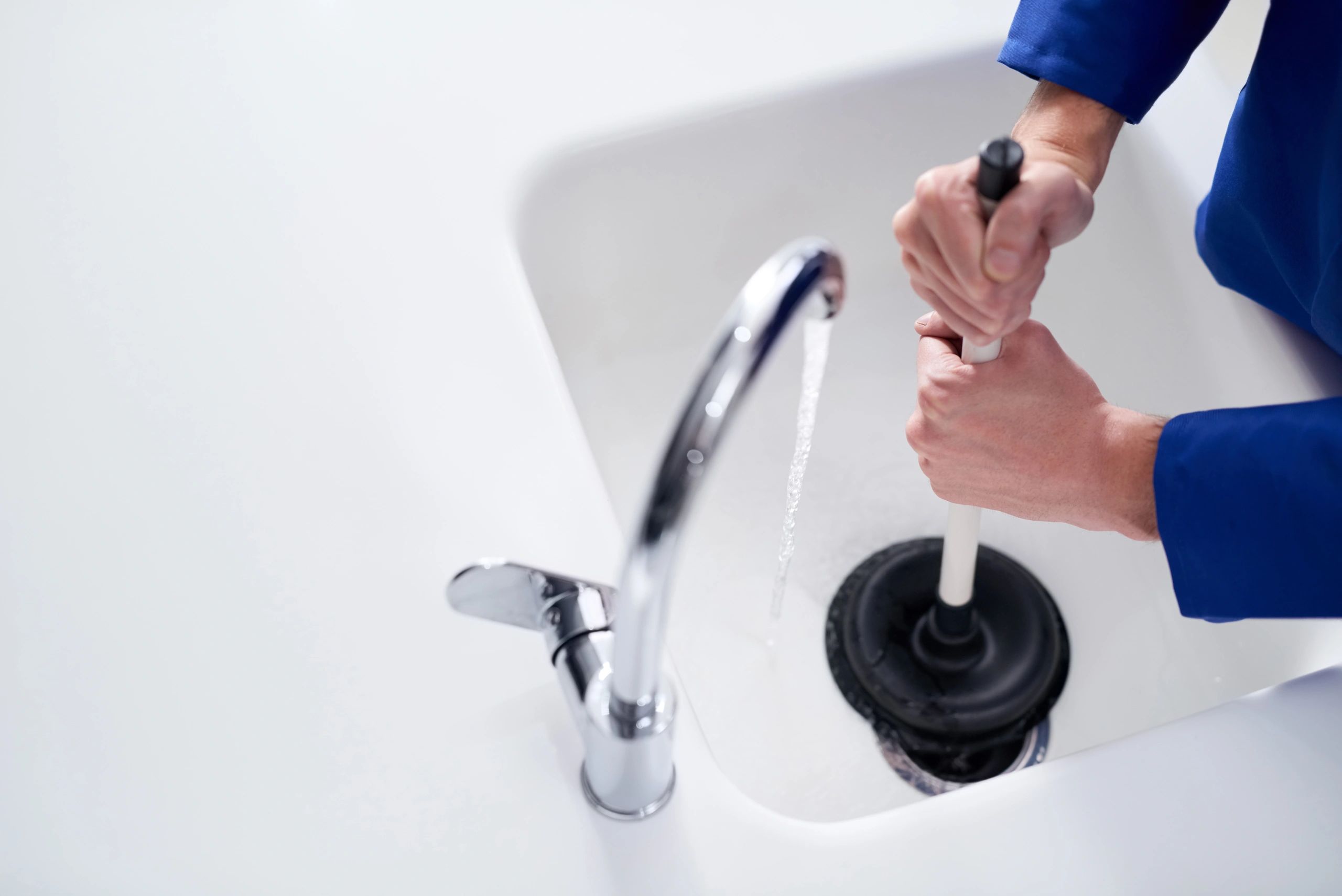
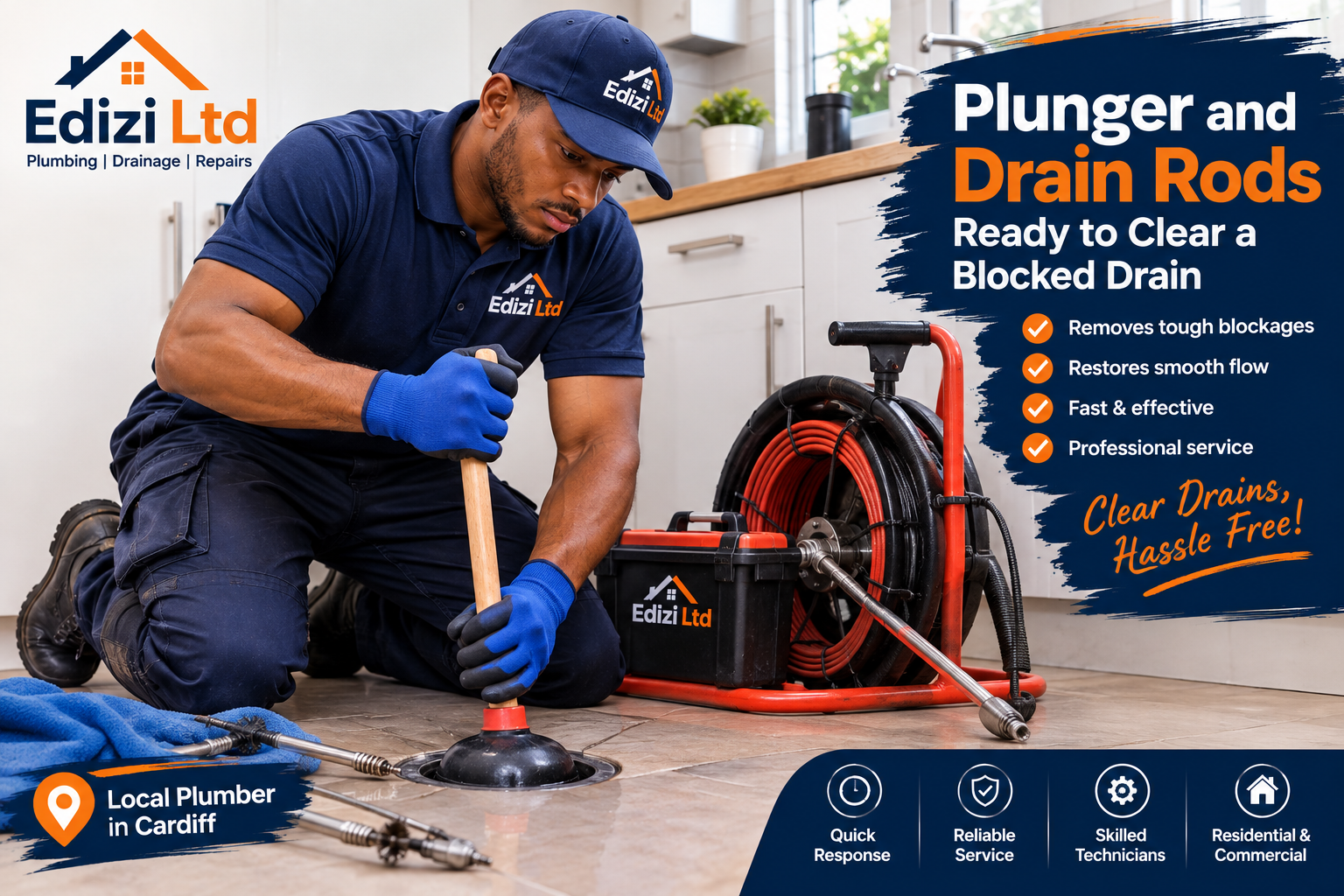
    For sinks, baths and toilets, a good plunger is the first thing to try. Make sure there is enough water to cover the rubber cup, seal it over the plughole and pump firmly several times. For a sink with an overflow hole, block the overflow with a damp cloth so the pressure goes where it should.

    2. Clean the trap

    Under most basins and sinks there is a U-shaped or bottle trap that catches debris. Place a bucket underneath, unscrew it carefully and clear out whatever is stuck inside. Rinse it, refit it and make sure the joints are tight when you finish.

    3. Use hot, not boiling, water

    For greasy kitchen blockages, flushing the drain with very hot tap water can help move fat along. Avoid pouring boiling water into toilets, porcelain or plastic pipes, as it can crack or soften them.

    4. Try a drain snake or hand auger

    A flexible drain snake can reach into the pipe, break up a blockage or pull it out. Feed it in slowly, turning as you go, and pull out any debris carefully.

    5. Try bicarbonate of soda and white vinegar

    Pouring bicarbonate of soda followed by white vinegar and leaving it for a while can help loosen light build-up in a slow drain. It will not clear a serious blockage, but it is a gentle option for minor problems and odours.

    What Not to Do With a Blocked Drain

    • Do not keep running water. It can overflow and cause damage.
    • Do not use harsh chemical drain cleaners repeatedly. They can damage pipes, create hazards and make the job harder and less safe for a plumber to fix.
    • Do not use a plunger after chemicals. The liquid can splash back and burn skin or eyes.
    • Do not push objects deep into the pipe. You may jam the blockage further in.
    • Do not flush wipes, nappies or cotton wool. They do not break down and cause repeat blockages.
    • Do not ignore it. A slow drain that gets worse can overflow, leak and cause damp.

    When Should You Call a Plumber?

    Call a professional if:

    • The blockage keeps coming back after you clear it
    • More than one sink, bath or toilet is affected
    • Water is backing up into other fixtures
    • You have tried a plunger and a snake and nothing has worked
    • There is a persistent bad smell
    • Water is overflowing, or sewage is coming up
    • The problem is outside, such as a flooded gully or manhole
    • You suspect tree roots or a damaged pipe
    • You are not comfortable taking apart pipework

    If waste water or sewage is overflowing into your home, treat it as urgent. Our guide on what to do before an emergency plumber arrives explains the first steps to limit damage.

    Who Is Responsible for Outside Drains in Swansea?

    When the blockage is outside your property, it helps to know who is responsible. In Wales, Dŵr Cymru Welsh Water looks after the public sewer network, and in many cases drains and sewers shared with neighbours or outside your boundary also fall under the water company. Drains that serve only your own property and sit within your boundary are usually your responsibility.

    Because the rules depend on where exactly the pipe runs, it is worth checking with Welsh Water or asking a plumber to look at the problem first. We can often tell you what you are dealing with and whether it is something we can clear for you.

    How a Plumber Clears a Blocked Drain

    Professional drain clearance usually follows a simple process:

    1. Find the blockage. The plumber checks which fixtures are affected, inspects the trap and tests the flow to work out where the problem sits.
    2. Choose the right method. This may be rodding, a drain auger or another method suited to the type of blockage and the pipe.
    3. Clear the blockage. The plumber removes or breaks up the obstruction and restores flow.
    4. Test the system. Water is run through to check that the drain flows freely and there are no leaks.
    5. Advise on prevention. If something is causing repeat blockages, such as grease, wipes or damaged pipework, you will be told what to change or repair.

    We explain what we find and what the fix involves before we begin, so you know what to expect.

    How to Prevent Blocked Drains

    • Bin your cooking fat and oil once cooled, rather than pouring it down the sink.
    • Use a drain strainer in sinks, baths and showers to catch food and hair.
    • Only flush toilet paper, and no wipes, nappies, cotton buds or sanitary items.
    • Run hot water through your kitchen sink after washing up to help move grease along.
    • Clean traps and plugholes regularly.
    • Keep outside gullies and drain covers clear of leaves and debris, especially in autumn.
    • Fix slow drains early. They are far easier to clear than a full blockage.

    Areas We Cover in and Around Swansea

    We are based in Cardiff and serve homes and businesses across South Wales, including:

    • Swansea
    • Cardiff
    • Newport
    • Bridgend
    • Barry

    We also cover surrounding towns and villages. Check our service areas page or call to confirm that we cover your postcode.

    How Edizi Ltd Can Help

    Our services include:

    • Drain unblocking: clearing blocked sinks, toilets, baths and drains.
    • Emergency plumbing: urgent call-outs for overflows and leaks.
    • Leak repairs: fixing leaks found while investigating a blockage.
    • Tap and faucet repairs: repairing fittings that are failing or leaking.
    • Bathroom plumbing: pipework and fixtures for bathrooms.

    We focus on fast response, clear communication, tidy work and fair pricing. You can read what customers say on our testimonials page.

    Frequently Asked Questions

    Why is my drain blocked in Swansea?

    The most common causes are grease and food waste in kitchens, hair and soap in bathrooms, wipes and too much paper in toilets, and leaves, silt or tree roots in outside drains.

    How do I unblock a drain without chemicals?

    Start with a plunger, then try cleaning the trap, flushing with hot (not boiling) water or using a drain snake. If none of these work, call a plumber.

    Are chemical drain cleaners safe?

    They can be harsh on pipes and hazardous if they splash. They also make it riskier for a plumber to work on the drain afterwards. If you have used one, tell your plumber when they arrive.

    Can a blocked drain cause damage?

    Yes. Overflowing water can damage floors and walls, cause damp and mould and, in the case of sewage, create a health risk. Act early.

    Who is responsible for a blocked drain outside my house?

    It depends on where the pipe is and who it serves. Public sewers and many shared drains are the water company’s responsibility, while private drains within your boundary usually fall to you. A plumber or Welsh Water can help you find out.

    How much does it cost to unblock a drain in Swansea?

    The cost depends on where the blockage is, how severe it is and the method needed. We aim to give you clear guidance before work starts. Send us the details through our Get a Quote page.

    Blocked Drain in Swansea? Contact Edizi Ltd

    If you have a slow drain, a blocked toilet or an overflowing sink, we are ready to help across Swansea and South Wales.

    Call us now on +44 7397 191375, send a message on our contact page or request a quote through our Get a Quote page.

    Edizi Ltd: your nearby plumber in Swansea, Cardiff and South Wales.
  • Burst Pipe? 7 Steps to Take Right Now (South Wales Guide)

    Burst Pipe? 7 Steps to Take Right Now (South Wales Guide)

    A burst pipe is one of the most stressful things that can happen in a home. Water can spread through a room in minutes, soak floors and plasterboard, drip through ceilings and reach electrics. The good news is that the first few steps you take can sharply reduce the damage, and none of them need special tools.

    This guide walks you through exactly what to do if a pipe bursts, how to tell if you have one, why pipes burst in South Wales homes, and when to call a professional. At Edizi Ltd, we are a nearby plumber serving Cardiff, Swansea, Newport, Bridgend, Barry and the wider region, so these are problems we see regularly.

    How to Tell If You Have a Burst Pipe

    Some burst pipes are obvious. Others hide behind walls, under floors or in lofts. Watch for these signs:

    • Water visibly spraying or pouring from a pipe or joint
    • Sudden drop in water pressure, or taps running only a trickle
    • Water stains, bubbling paint or damp patches on ceilings and walls
    • The sound of running water when everything is switched off
    • A sudden spike in your water bill
    • A musty smell, or warped or soft flooring
    • Cold taps that produce no water at all in freezing weather

    If you notice any of these, act immediately. Do not wait to see whether it gets better.

    7 Steps to Take Right Now If a Pipe Bursts

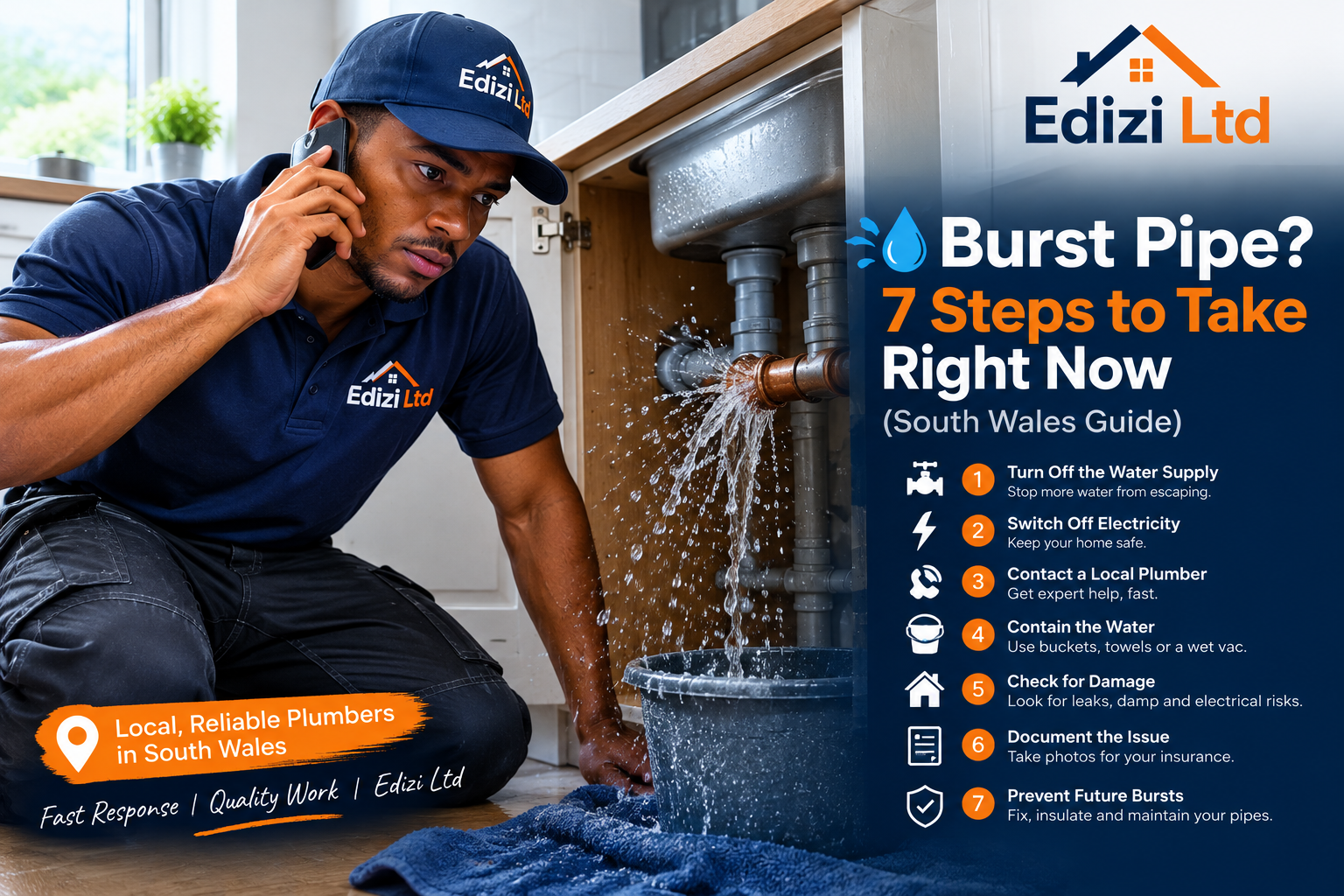
    Step 1: Turn off the water at the stopcock

    This is the most important step. Your stopcock shuts off the mains supply to the property, so find it quickly and turn it clockwise. It is usually under the kitchen sink, but it may be in a utility room, understairs cupboard, garage or near the front door. If it is stiff, use steady pressure rather than force.

    Step 2: Drain the pipes

    With the stopcock off, open your cold taps and flush the toilets. This empties the water still in the pipes so it stops pouring out of the burst section.

    Step 3: Turn off electrics if water is near them, and only if it is safe

    If water is close to sockets, appliances, light fittings or your consumer unit, switch off the power at the consumer unit, but only if you can reach it without standing in water. If you cannot do it safely, keep away and tell the plumber and, if needed, an electrician.

    Step 4: Catch and contain the water

    Use buckets, bowls and towels to collect leaking water. If water is collecting in a bulge in the ceiling, make a small hole at the lowest point with a screwdriver so it can drain into a bucket, which helps prevent a larger collapse. Keep clear of the area while you do this.

    Step 5: Move belongings and take photos

    Move furniture, rugs, electronics and valuables out of the wet area. Before you clean anything up, photograph the damage and note the time you found it. This helps if you need to make a home insurance claim.

    Step 6: Call a plumber

    Call a local plumber once the water is under control. Tell them where the leak is, what you can see, whether you have turned off the stopcock and whether electrics are affected. A nearby plumber can usually reach you faster and may be able to give you advice on the phone while they travel.

    Step 7: Contact your insurer and start drying out

    Many home insurance policies cover escape of water, but terms differ, so check yours and tell the insurer promptly. Open windows if the weather allows, use towels and mops to remove standing water, and run dehumidifiers or fans if you have them. Do not turn the heating up high in a wet room, as it can trap moisture.

    Why Do Pipes Burst in South Wales Homes?

    Burst pipes are not only a winter problem, although cold snaps are a common cause. In Cardiff and across South Wales we most often see:

    • Frozen pipes. Water expands as it freezes, which puts pressure on the pipe. Pipes in lofts, garages, outbuildings and external walls are the most at risk, and the burst often shows up once the thaw starts.
    • Ageing or corroded pipework. Older Victorian and interwar properties may have original pipes and fittings that weaken over time.
    • High water pressure. Sustained pressure above what pipes and fittings are designed for can cause leaks and splits.
    • Poor joints or fittings. Failed compression joints, worn washers and badly made connections can give way.
    • Physical damage. Nails or screws driven into walls, building work or accidental knocks can puncture a pipe.
    • Movement in the building. Settlement and shifting can strain pipes over time.

    Knowing the cause helps your plumber decide whether a simple repair is enough or whether a longer section of pipework needs replacing.

    What a Plumber Will Do When They Arrive

    Here is what typically happens during a burst pipe call-out:

    1. Assess the damage. The plumber checks where the water is coming from and whether the main supply is fully isolated.
    2. Find the source. In some cases the leak is not where the water shows up, so they trace the pipe back to the real failure point.
    3. Repair or replace the section. Depending on the pipe material and the extent of the damage, this might be a repair joint, a replacement length or a larger re-pipe.
    4. Test the system. The water is turned back on slowly and the repair is checked for leaks and pressure.
    5. Advise on next steps. This may include drying out, insurance paperwork and how to avoid a repeat.

    At Edizi Ltd, we explain what we find and what the repair involves before we start, so there are no surprises.

    Is It an Emergency? When to Call Straight Away

    Call a plumber immediately if:

    • Water is escaping and you cannot stop it
    • Water is coming through a ceiling or near electrics
    • You have no water supply and a burst is suspected
    • The leak is inside a wall or under a floor and spreading
    • Sewage or dirty water is involved

    For more on handling urgent call-outs, read our guide to what to do before an emergency plumber arrives.

    What Not to Do With a Burst Pipe

    • Do not leave it until morning if water is actively escaping. Damage spreads quickly.
    • Do not use a blowtorch or naked flame to thaw a frozen pipe. It is a serious fire risk and can damage the pipe further.
    • Do not use electrical items near water. This includes hairdryers, heaters and extension leads.
    • Do not ignore a small leak. Slow leaks often become bigger failures.
    • Do not paint over damp patches. Fix the source first, then redecorate once the area is fully dry.

    How to Reduce the Risk of Burst Pipes

    A little preparation goes a long way:

    • Know where your stopcock is and check that it turns freely.
    • Insulate exposed pipes in lofts, garages, cellars and outside walls before winter.
    • Fix dripping taps and small leaks early.
    • Keep your property warm in very cold weather if you are going away, so pipes do not freeze.
    • Have older pipework checked by a plumber if you see green corrosion, stains or repeated leaks.

    We will cover winter preparation in more detail in our guide to preventing frozen pipes in Wales.

    Areas We Cover in South Wales

    We are based in Cardiff and serve homes and businesses across:

    • Cardiff
    • Swansea
    • Newport
    • Bridgend
    • Barry

    We also cover surrounding towns and villages. Check our service areas page or call to confirm that we cover your postcode.

    How Edizi Ltd Can Help

    Our services include:

    • Emergency plumbing: urgent call-outs for burst pipes and leaks.
    • Leak repairs: finding the cause and fixing it properly.
    • Tap and faucet repairs: repairing or replacing failed taps and valves.
    • Drain unblocking: clearing blocked drains that can cause overflows.
    • Bathroom plumbing: repairing and replacing pipework and fixtures.

    We focus on fast response, clear communication, tidy work and fair pricing. You can read what customers say on our testimonials page.

    Frequently Asked Questions

    What should I do first if a pipe bursts?

    Turn off the water at your main stopcock straight away. Then open the cold taps to drain the pipes, and switch off electrics near the water only if you can do it safely. Call a plumber as soon as the water is under control.

    How quickly can a burst pipe cause damage?

    Very quickly. A burst pipe can release a large amount of water in a short time, soaking floors, walls and ceilings. That is why stopping the water first is so important.

    Will my home insurance cover a burst pipe?

    Many policies cover escape of water, but conditions differ. Check your policy, photograph the damage and contact your insurer as soon as possible.

    Can you repair a burst pipe in the same visit?

    In many cases, yes, depending on the pipe, the location and the parts needed. Your plumber will explain what the repair involves once they have seen the problem.

    How much does it cost to repair a burst pipe in South Wales?

    The cost depends on the pipe type, how easy it is to reach, how much needs replacing and the time involved. We aim to give you clear guidance on likely costs before work starts. You can send details through our Get a Quote page.

    Do you cover burst pipes outside Cardiff?

    Yes. We serve Swansea, Newport, Bridgend, Barry and surrounding areas across South Wales. Call to confirm availability for your location.

    Burst Pipe in South Wales? Call Edizi Ltd

    If you have a burst pipe or a serious leak, turn off your stopcock, stay safe and get in touch.

    Call us now on +44 7397 191375, send a message on our contact page or request a quote through our Get a Quote page.

    Edizi Ltd: your nearby plumber in Cardiff and South Wales.

  • Plumber Near Me in Cardiff: How to Find a Reliable Local Plumber

    Plumber Near Me in Cardiff: How to Find a Reliable Local Plumber

    When a pipe starts leaking or a drain stops clearing, the first thing most people do is type “plumber near me” into Google. It makes sense. You want someone close, someone quick, and someone you can trust to fix the problem properly the first time.

    But searching is the easy part. Choosing the right plumber from the results is harder, especially when water is already spreading across the kitchen floor. This guide explains what to look for in a local plumber in Cardiff, which questions to ask before you book, and how to spot the warning signs of a plumber you should avoid.

    At Edizi Ltd, we are a nearby plumber serving Cardiff and the wider South Wales area, so we know what homeowners, landlords and businesses expect when they call for help.

    Why Choosing a Local Plumber in Cardiff Matters

    A plumber based close to you has real advantages over one travelling a long way for the job.

    • Faster response times. Shorter travel means quicker arrival, which matters most when you have a burst pipe or an active leak.
    • Local knowledge. Cardiff has a mix of Victorian terraces, post-war semis and modern flats, and each has its own typical plumbing issues. A plumber who works in the area every week has seen them all.
    • Easier follow-up. If something needs adjusting after the job, a local plumber can get back to you quickly.
    • Accountability. A plumber who relies on local reputation has every reason to do the work well.

    When Should You Call a Plumber?

    Some problems can wait until tomorrow. Others cannot. Call a plumber straight away if you notice any of the following:

    • A burst pipe or water escaping from a joint
    • A leak that keeps coming back or is getting worse
    • No water, or sudden loss of water pressure
    • A blocked toilet, sink or drain that will not clear
    • Water stains, damp patches or a musty smell on walls or ceilings
    • A tap that will not shut off
    • Gurgling pipes or slow drains throughout the property

    If water is escaping and you cannot stop it, turn off your stopcock first (usually under the kitchen sink or near the front door), then call an emergency plumber.

    Common Jobs a Nearby Plumber Can Help With

    A good local plumber handles far more than emergencies. At Edizi Ltd, our services include:

    • Emergency plumbing: urgent call-outs for leaks, bursts and loss of water.
    • Tap and faucet repairs: fixing dripping taps, improving low water pressure and fitting modern fixtures.
    • Drain unblocking: clearing blocked sinks, toilets and drains quickly.
    • Leak repairs: finding the source, repairing it and preventing further damage.
    • Bathroom plumbing: pipework and fixtures for new bathrooms and upgrades.

    Whether you own your home, rent out properties or run a small business, having a plumber you already trust saves stress when something goes wrong.

    How to Find a Reliable Plumber Near You in Cardiff

    Here is a simple checklist you can work through in a few minutes.

    1. Check that they are genuinely local

    Look for a Cardiff or South Wales address, a local phone number and clear information about the areas they cover. Be cautious of listings that show a city name but no real business details behind it.

    2. Read recent reviews and testimonials

    Look for reviews that mention specific jobs, timekeeping and tidiness. A page of recent, detailed feedback tells you far more than a perfect star rating with no comments. You can see feedback from our customers on our testimonials page.

    3. Ask about pricing before work starts

    A trustworthy plumber explains likely costs up front. Call-out fees and hourly rates vary between companies, so ask what is included, whether materials are charged separately and how the final price is worked out. Avoid anyone who will only say “we’ll see when we get there” with no guidance at all.

    4. Ask about insurance and recognised registration

    A professional plumber should carry public liability insurance. It is also worth asking whether they belong to a recognised trade scheme such as WaterSafe. Membership is not a legal requirement for all plumbing work, but it shows a commitment to standards.

    5. Check availability for emergencies

    If a pipe bursts at night or on a weekend, you do not want to be searching from scratch. Ask whether they offer emergency call-outs and what their typical response time is.

    6. Notice how they communicate

    Do they answer the phone, reply to messages and explain things clearly? Good communication before the job usually means good communication during it.

    Questions to Ask Before You Book a Plumber

    Keep these handy when you call:

    1. Do you cover my area, and how soon can you attend?
    2. Do you charge a call-out fee, and what does it include?
    3. Can you give me an estimate over the phone or by message?
    4. Are you insured?
    5. Do you offer any guarantee on the work?
    6. Will you tidy up and remove old parts when finished?
    7. Do you handle emergency call-outs outside normal hours?

    A reliable plumber will answer all of these without hesitation.

    Red Flags to Watch Out For

    • No clear business name, address or contact details
    • Pressure to accept a high price immediately
    • Cash-only demands with no receipt or invoice
    • Unwillingness to explain what is wrong or what the fix involves
    • Prices that are far lower than every other quote you have received
    • Only vague or anonymous reviews

    If something feels wrong, trust your instincts and get a second opinion.

    Areas We Cover Around Cardiff and South Wales

    We are based in Cardiff and serve homes and businesses across South Wales, including:

    • Cardiff
    • Swansea
    • Newport
    • Bridgend
    • Barry

    We also cover the surrounding towns and villages. Check our service areas page to see whether we cover your postcode, or call us to confirm.

    Why Choose Edizi Ltd as Your Nearby Plumber in Cardiff?

    We built Edizi Ltd around the things customers tell us matter most:

    • Fast response. Quick call-outs across South Wales, with clear expectations on arrival.
    • Affordable, transparent pricing. Upfront guidance on likely costs so there are no surprises.
    • Tidy, professional workmanship. Jobs done properly, with a clean finish.
    • Clear communication. We keep you informed from the first call to the final check.
    • Homes and businesses. We support homeowners, landlords, property managers and small businesses.

    If you are searching for an expert plumber in Cardiff, we would be glad to help.

    Frequently Asked Questions

    How do I find a reliable plumber near me in Cardiff?

    Check that the plumber is genuinely local, read recent reviews, ask for pricing guidance up front, confirm they are insured and ask whether they offer emergency call-outs. A plumber who answers your questions clearly is usually a good sign.

    Do you offer emergency plumbing in Cardiff?

    Yes. If you have a burst pipe, an active leak, a blocked toilet or no water, call us on +44 7397 191375 for urgent help.

    Which areas do you cover besides Cardiff?

    We serve Cardiff, Swansea, Newport, Bridgend, Barry and surrounding areas across South Wales.

    How much does a plumber cost in Cardiff?

    Prices depend on the type of job, the time it takes and the materials needed. We aim to give you clear guidance on likely costs before work begins. You can send us the details through our Get a Quote page.

    Can you help landlords and commercial properties?

    Yes. We support landlords, property managers and small businesses with repairs, maintenance and new installations.

    What should I do while waiting for a plumber to arrive?

    Turn off your stopcock if water is escaping, switch off electrics near any water, move belongings away from the leak and take photos for insurance purposes if damage has occurred.

    Need a Plumber Near You in Cardiff? Contact Edizi Ltd

    If you have a leak, a blocked drain, a dripping tap or a bathroom project, we are ready to help across Cardiff and South Wales.

    Call us now on +44 7397 191375, send us a message on our contact page or request a free quote through our Get a Quote page.

    Edizi Ltd: your nearby plumber in Cardiff.