A blocked drain rarely announces itself politely. It starts as a sink that drains a little slower than usual, then a gurgle from the pipes, then a smell, and finally water that will not go anywhere at all. If you are dealing with a blocked drain in Swansea, the good news is that many blockages can be cleared quickly once you know what is causing them.
This guide explains the common causes of blocked drains, the safe fixes you can try yourself, the things you should never do, and when it is time to call a professional. At Edizi Ltd, we are a nearby plumber serving Swansea, Cardiff, Newport, Bridgend, Barry and the wider South Wales area.
Signs You Have a Blocked Drain
The earlier you spot the signs, the easier the fix. Look out for:
- Slow-draining sinks, baths or showers
- Gurgling noises from plugholes or toilets
- Water pooling in the sink, shower tray or around a floor drain
- Bad smells coming from drains or around the property
- A toilet that flushes weakly or fills almost to the top
- Water backing up into another fixture when you use a different one
- Damp patches or overflow outside near a manhole or gully
If more than one fixture is affected at the same time, the blockage is probably further along the pipework rather than just in one sink.
Common Causes of Blocked Drains in Swansea Homes
Blockages are usually caused by what goes down the drain, plus age and wear. These are the most frequent culprits.
Kitchen sinks
- Fat, oil and grease. These cool and harden inside pipes, trapping food scraps and building up over time.
- Food waste. Rice, pasta, coffee grounds and vegetable peelings can collect and clog the trap.
- Soap scum and detergent residue. These slowly narrow the pipe.
Bathrooms
- Hair and soap. The most common cause of slow showers, baths and basins.
- Toiletries and cotton buds. Items that do not break down can catch and snag in bends.
- Limescale. Hard water deposits can build up inside pipes and fittings.
Toilets
- Too much toilet paper. Large amounts can clump and block the bend.
- Wipes, even “flushable” ones. Wipes do not break down like toilet paper and are a major cause of blockages.
- Nappies, sanitary products and cotton wool. These should never be flushed.
Outside drains and pipework
- Leaves, silt and debris collecting in gullies and drain covers
- Tree roots growing into cracked or loose joints in underground pipes
- Collapsed or damaged pipes caused by ground movement or age
- Heavy rainfall overwhelming drains that are already partly blocked
Swansea has a mix of older terraced homes and newer estates, and older properties are more likely to have ageing pipes, tight bends and shared drainage that can block more easily.
Safe Ways to Clear a Blocked Drain Yourself
For minor blockages, you can often fix the problem without calling anyone. Try these in order.
1. Use a plunger
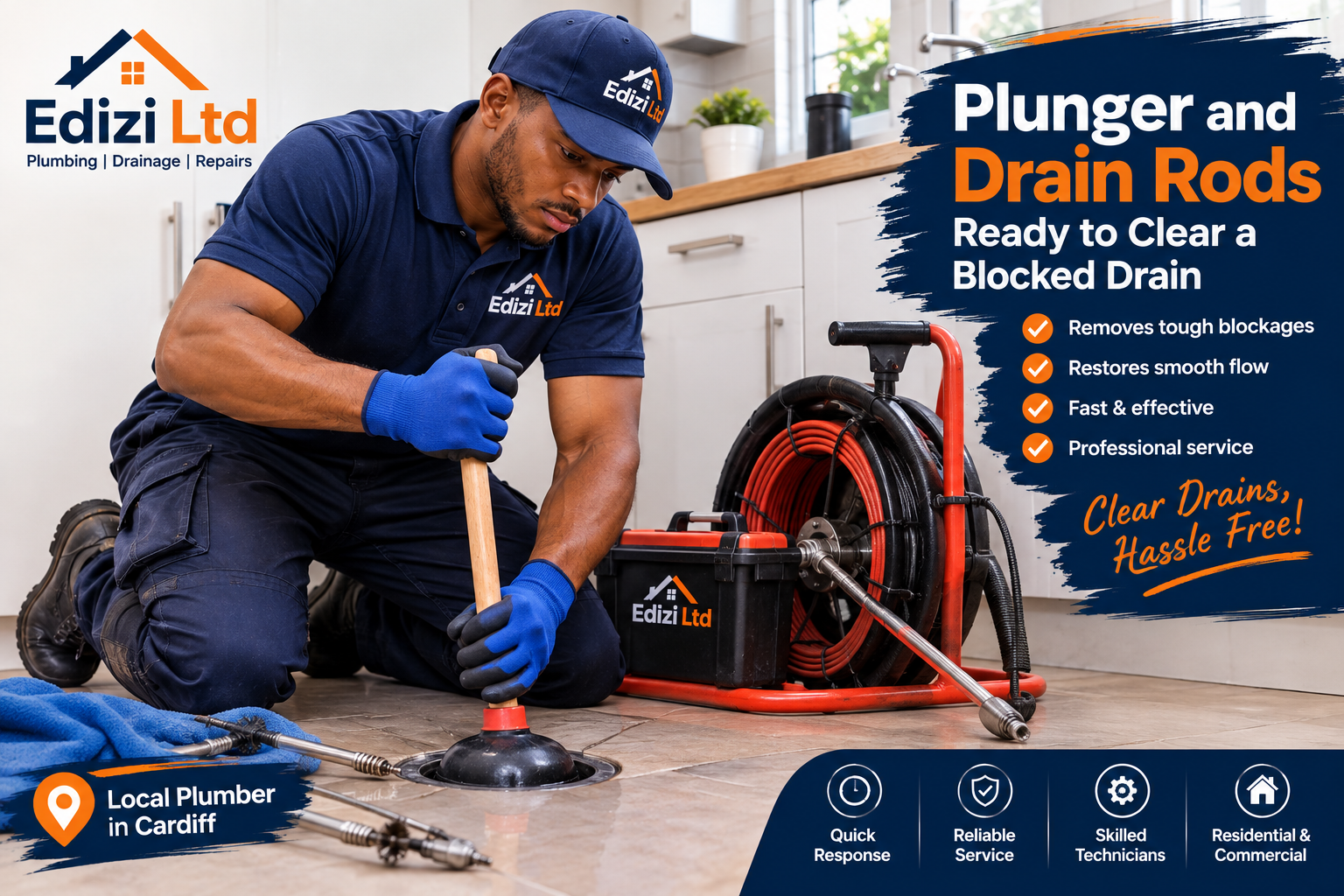
For sinks, baths and toilets, a good plunger is the first thing to try. Make sure there is enough water to cover the rubber cup, seal it over the plughole and pump firmly several times. For a sink with an overflow hole, block the overflow with a damp cloth so the pressure goes where it should.
2. Clean the trap
Under most basins and sinks there is a U-shaped or bottle trap that catches debris. Place a bucket underneath, unscrew it carefully and clear out whatever is stuck inside. Rinse it, refit it and make sure the joints are tight when you finish.
3. Use hot, not boiling, water
For greasy kitchen blockages, flushing the drain with very hot tap water can help move fat along. Avoid pouring boiling water into toilets, porcelain or plastic pipes, as it can crack or soften them.
4. Try a drain snake or hand auger
A flexible drain snake can reach into the pipe, break up a blockage or pull it out. Feed it in slowly, turning as you go, and pull out any debris carefully.
5. Try bicarbonate of soda and white vinegar
Pouring bicarbonate of soda followed by white vinegar and leaving it for a while can help loosen light build-up in a slow drain. It will not clear a serious blockage, but it is a gentle option for minor problems and odours.
What Not to Do With a Blocked Drain
- Do not keep running water. It can overflow and cause damage.
- Do not use harsh chemical drain cleaners repeatedly. They can damage pipes, create hazards and make the job harder and less safe for a plumber to fix.
- Do not use a plunger after chemicals. The liquid can splash back and burn skin or eyes.
- Do not push objects deep into the pipe. You may jam the blockage further in.
- Do not flush wipes, nappies or cotton wool. They do not break down and cause repeat blockages.
- Do not ignore it. A slow drain that gets worse can overflow, leak and cause damp.
When Should You Call a Plumber?
Call a professional if:
- The blockage keeps coming back after you clear it
- More than one sink, bath or toilet is affected
- Water is backing up into other fixtures
- You have tried a plunger and a snake and nothing has worked
- There is a persistent bad smell
- Water is overflowing, or sewage is coming up
- The problem is outside, such as a flooded gully or manhole
- You suspect tree roots or a damaged pipe
- You are not comfortable taking apart pipework
If waste water or sewage is overflowing into your home, treat it as urgent. Our guide on what to do before an emergency plumber arrives explains the first steps to limit damage.
Who Is Responsible for Outside Drains in Swansea?
When the blockage is outside your property, it helps to know who is responsible. In Wales, Dŵr Cymru Welsh Water looks after the public sewer network, and in many cases drains and sewers shared with neighbours or outside your boundary also fall under the water company. Drains that serve only your own property and sit within your boundary are usually your responsibility.
Because the rules depend on where exactly the pipe runs, it is worth checking with Welsh Water or asking a plumber to look at the problem first. We can often tell you what you are dealing with and whether it is something we can clear for you.
How a Plumber Clears a Blocked Drain
Professional drain clearance usually follows a simple process:
- Find the blockage. The plumber checks which fixtures are affected, inspects the trap and tests the flow to work out where the problem sits.
- Choose the right method. This may be rodding, a drain auger or another method suited to the type of blockage and the pipe.
- Clear the blockage. The plumber removes or breaks up the obstruction and restores flow.
- Test the system. Water is run through to check that the drain flows freely and there are no leaks.
- Advise on prevention. If something is causing repeat blockages, such as grease, wipes or damaged pipework, you will be told what to change or repair.
We explain what we find and what the fix involves before we begin, so you know what to expect.
How to Prevent Blocked Drains
- Bin your cooking fat and oil once cooled, rather than pouring it down the sink.
- Use a drain strainer in sinks, baths and showers to catch food and hair.
- Only flush toilet paper, and no wipes, nappies, cotton buds or sanitary items.
- Run hot water through your kitchen sink after washing up to help move grease along.
- Clean traps and plugholes regularly.
- Keep outside gullies and drain covers clear of leaves and debris, especially in autumn.
- Fix slow drains early. They are far easier to clear than a full blockage.
Areas We Cover in and Around Swansea
We are based in Cardiff and serve homes and businesses across South Wales, including:
- Swansea
- Cardiff
- Newport
- Bridgend
- Barry
We also cover surrounding towns and villages. Check our service areas page or call to confirm that we cover your postcode.
How Edizi Ltd Can Help
Our services include:
- Drain unblocking: clearing blocked sinks, toilets, baths and drains.
- Emergency plumbing: urgent call-outs for overflows and leaks.
- Leak repairs: fixing leaks found while investigating a blockage.
- Tap and faucet repairs: repairing fittings that are failing or leaking.
- Bathroom plumbing: pipework and fixtures for bathrooms.
We focus on fast response, clear communication, tidy work and fair pricing. You can read what customers say on our testimonials page.
Frequently Asked Questions
Why is my drain blocked in Swansea?
The most common causes are grease and food waste in kitchens, hair and soap in bathrooms, wipes and too much paper in toilets, and leaves, silt or tree roots in outside drains.
How do I unblock a drain without chemicals?
Start with a plunger, then try cleaning the trap, flushing with hot (not boiling) water or using a drain snake. If none of these work, call a plumber.
Are chemical drain cleaners safe?
They can be harsh on pipes and hazardous if they splash. They also make it riskier for a plumber to work on the drain afterwards. If you have used one, tell your plumber when they arrive.
Can a blocked drain cause damage?
Yes. Overflowing water can damage floors and walls, cause damp and mould and, in the case of sewage, create a health risk. Act early.
Who is responsible for a blocked drain outside my house?
It depends on where the pipe is and who it serves. Public sewers and many shared drains are the water company’s responsibility, while private drains within your boundary usually fall to you. A plumber or Welsh Water can help you find out.
How much does it cost to unblock a drain in Swansea?
The cost depends on where the blockage is, how severe it is and the method needed. We aim to give you clear guidance before work starts. Send us the details through our Get a Quote page.
Blocked Drain in Swansea? Contact Edizi Ltd
If you have a slow drain, a blocked toilet or an overflowing sink, we are ready to help across Swansea and South Wales.
Call us now on +44 7397 191375, send a message on our contact page or request a quote through our Get a Quote page.
Edizi Ltd: your nearby plumber in Swansea, Cardiff and South Wales.